
Neotask
My current company brings agents, connected apps, and ongoing work into one environment. People set the objectives and boundaries; agents carry out the work.
About Neotask
Daniel Bullock
Founder & CEO of NeotaskI’ve spent years building autonomous software. With Galaxsio, users purchased more than $40 million in product through systems I built.
Advances in AI let me apply that experience to a much wider range of work. I’m now building Neotask and the tools that help agents plan, use apps, coordinate, and execute within defined limits.
My current company brings agents, connected apps, and ongoing work into one environment. People set the objectives and boundaries; agents carry out the work.
About Neotask
I am building Intervieux with my brother in partnership with Level Up Ventures. AI interviews, career support, and hiring tools connect candidates with employers.
About IntervieuxThe software factory I use across my projects: orchestration, reusable procedures, memory, and verification. Neomax coordinates the coding agents behind it.
Inside my processWhat I’m learning about AI, autonomy, and building software businesses. A place to get to know the founder and follow the thinking behind the work.
Visit the blogI think AI can let businesses grow in ways that were previously out of reach. A team that can serve more customers or develop a new service has more room to invest in people and take on work it could not afford before.
I want that growth to keep people employed, create opportunities, and expand the scope of what a business can do. The decisions businesses make about that new capacity will shape the jobs that follow.
Helping people find those opportunities is part of my work too. With Intervieux, we are using AI to connect the effort someone puts into getting hired with the information an employer needs to make a decision.
In partnership with Level Up Ventures
I co-founded Intervieux with my brother, and we are actively developing both sides of the hiring process.
Job discovery, resumes, AI interviews, simulations, and technical challenges help candidates prepare, demonstrate their ability, and get connected with employers.
An AI-powered applicant tracking system brings interviews, resumes, and assessments into the hiring pipeline. Employers can review the evidence, coordinate next steps, and move candidates toward an offer.
Planning, execution, verification, and recovery, all operating within defined boundaries.
Objectives · priorities · constraints · success criteria
Code · documentation · memory · skills · SOPs
Coordinate the work and decide what can run next.
Continue inside the approved scope. Escalate exceptions with the evidence needed for a decision.
Turn the objective into tasks with explicit dependencies, owners, and acceptance conditions. The task graph determines what can run in parallel and what must wait.
Turn the objective into tasks with explicit dependencies, owners, and acceptance conditions. The task graph determines what can run in parallel and what must wait.
Assign work to agents with defined responsibilities. Sub-agents take bounded tasks, while isolated worktrees and ownership rules keep concurrent changes separate.
Agents act through connected tools, code, terminals, and browsers. Tool access and credentials determine which systems each worker can read or change.
Reviewers inspect the work independently. Tests, CI, and behavior checks provide evidence against the acceptance criteria. Failed checks return work for revision.
Record results and completed actions before continuing. Durable state supports retries, handoffs, and recovery; rollback and audit history preserve a path back when a change fails.
Building agent systems
An agent needs more than a task description to work on its own. These are the capabilities I work on across Neotask and the development systems behind it.
Keep the brief, decisions, and current task state available across sessions. An agent resuming a job needs to know what changed, what passed, and what remains.
Give agents specific ways to act: read a document, update a task, inspect a build, or work in an app. Define access at the tool and account level so the allowed scope is enforceable.
Split work along boundaries that can be checked independently. Track dependencies and ownership so concurrent agents can make progress without overwriting each other’s changes.
Define what can run autonomously and what needs approval. Put spending, execution scope, and stop conditions into the system that runs the agent.
Turn a recurring job into a procedure with inputs, a schedule, and an expected result. Keep its execution history so a missed run or repeated failure is visible.
Check the result where it will be used. Preserve enough state to retry or resume a failed step, and keep deployment and rollback instructions alongside the work.
Inside the development process
I work with 10+ Claude Max and Codex subscriptions, alongside Kimi Code. My software factory connects the agents, tools, and repeatable workflows I use across my projects.
The engineering challenge is keeping all of that work coherent. A change to an integration can affect authentication, a gateway tool, the app interface, and documentation. Those pieces need a shared definition of done.
Write down the affected repositories, expected behavior, constraints, and proof required. Break the work into parts with clear ownership and dependencies.
Route tasks to an appropriate provider and model, isolate concurrent changes, and preserve task state when a worker stops or an account reaches a limit.
Test the code and the user flow. For an app integration, that includes connection, authorization, tool execution, and how the result appears in the interface.
Save the procedure, checks, and recovery steps. The next provider integration or upstream release starts with a workflow that already records what needs checking.
Development infrastructure
My Rust orchestrator coordinates coding agents, accounts, models, sessions, and worktrees. Managed workers keep durable task state, with scoped routing and recovery when execution is interrupted. It supports Claude, Codex, OpenCode, Kimi, and Grok adapters.
More about the workflow →Practical starting points
A few useful questions to answer before adding autonomy to a workflow.
Describe a result that can be inspected. “Research this account” leaves a lot open. “Produce a brief with source links, unanswered questions, and the next action” gives the agent a deliverable and gives you a way to judge it. Include where the result belongs and what to do when information is missing.
List the systems the agent must read and the changes it may make. Reading a CRM record, drafting an update, and sending that update are separate capabilities. Give the agent the access needed for its job, and make the approval boundary explicit for actions outside that scope.
Look for tasks with independent inputs and outputs: investigate separate components, implement changes in separate areas, or review a completed change. Work that repeatedly edits the same files needs sequencing or explicit ownership. More concurrent workers also create more coordination work.
Persist the current task, completed steps, and any external actions already taken. Before retrying, check whether the previous attempt succeeded. A process should be able to resume without sending the same message twice or repeating a change that already landed.
Define the exception cases up front: missing access, contradictory instructions, exhausted budget, repeated failures, or a decision outside the approved scope. Include the evidence a person needs to resolve the issue so the agent can continue from a clear decision.
What I built, the problems involved, and my role in the work.
I’m building Neotask to connect the parts of agent work that usually live in separate places: the objective, the conversation, the tools, the tasks, and the result.
Founder & CEOI co-founded Intervieux with my brother, and we are actively building it in partnership with Level Up Ventures. We are connecting the work of finding a job, demonstrating skills, and making a hiring decision in one platform.
Co-founder, with my brotherI built BetterSlip from scratch to make sports betting markets easier to compare. The platform scanned millions of odds each day across more than 140 sportsbooks, with data arriving at one-to-three-second latency.
Sole developer & team leadI built Galaxsio from scratch as a consumer-goods purchasing automation platform. It grew into two full software versions, more than 20 retailer integrations, and a product used by over 2,000 people.
Co-founder & CTOI built Watchtower Protection for Doris Talent Agency, working closely with legal counsel and agency management. The product needed to fit creators’ needs while giving the agency an evidence-based enforcement workflow.
Sole developerRockford Financial was my self-funded reselling business. I was the sole owner and operator, building the automation that supported purchasing and running the business around it.
Founder & CEOI co-founded KDG as a paid reselling intelligence community. I built monitors tracking thousands of sites, including the Shopify ecosystem, plus Slack alerts and Chrome extensions for subscribers.
Co-founder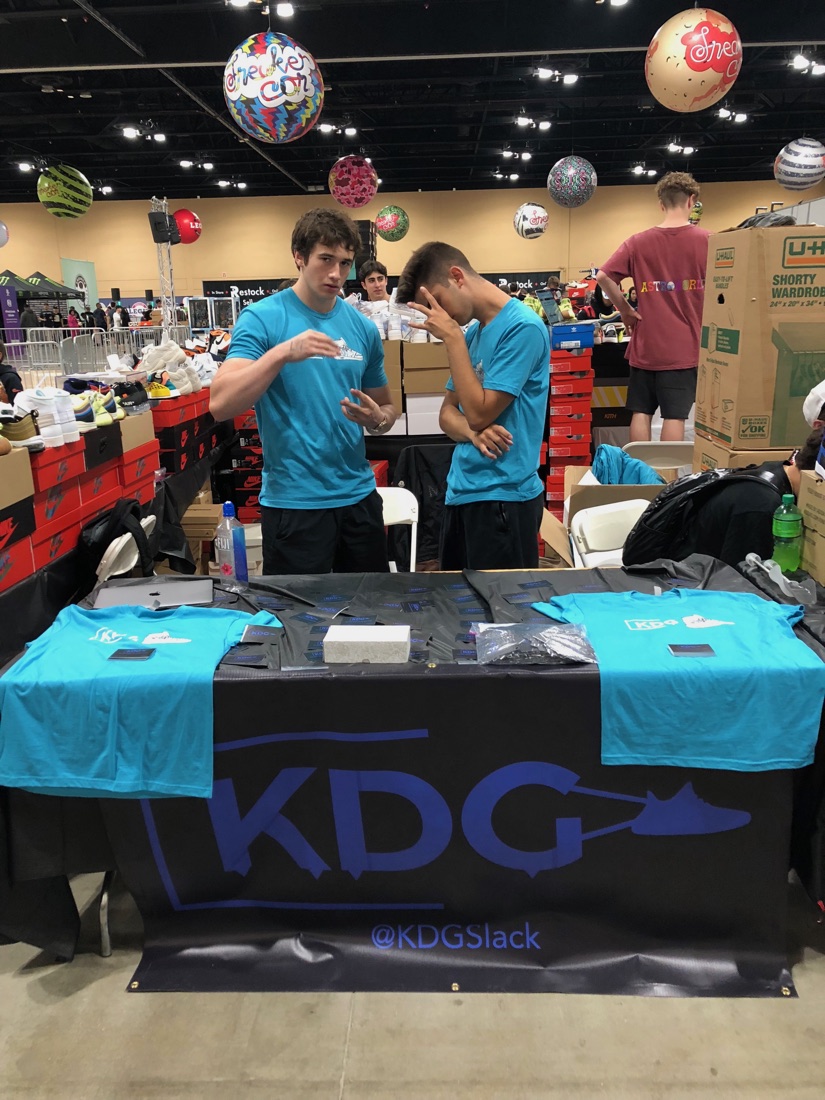
After my freshman year at the University of Iowa, I took time away from school and taught myself to code. DNA IO, Nike SNKRS purchasing automation software built with one partner, became my first licensed product.
Co-builder, with one partnerCustomer posts and product footage from Galaxsio, KDG Slack, and DNA Nike.
10,326 contributions in the last year
dannybsznLonger posts on coding agents, software development, and my projects.
No posts published yet. The development notes above are available now.
I work with teams on applied AI, automation, and custom software. Tell me what you’re trying to build and where you need help.
Discuss a project


